



 Implementing Sage Intacct Close Automation allows finance teams to focus on strategic tasks rather than manual, repetitive processes.
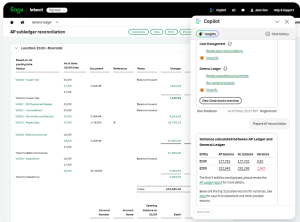 Close Automation is Sage Intacct’s answer to the administrative layer of month-end. Each task has a named owner, a deadline, and a defined place in the sequence, enforced by the system rather than held in someone’s head. Progress is visible to the whole team in real time, comments sit against the tasks they relate to, and the audit trail builds as the close progresses rather than being reconstructed once it’s done. For businesses managing multiple entities, currencies, or distributed finance teams spread across locations, the impact compounds, what used to require a senior controller holding the entire process in their head now runs as a live, shared workflow that anyone on the team can see and contribute to at any point in the period.